The Hydrogen Council recently released its Global Hydrogen Compass 2026, and the numbers confirm something H2FCP members have been building toward for years: hydrogen isn't a bet on the future anymore. It's under construction right now.
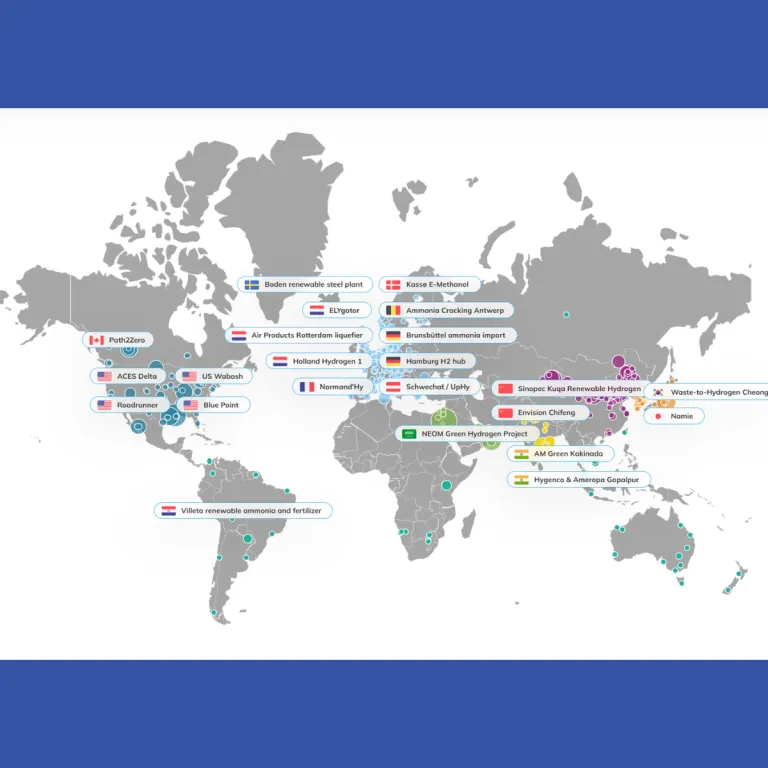
Produced with McKinsey & Company and built on data from more than 60 Hydrogen Council member companies, the report tracks every committed clean hydrogen project worldwide:
- That's now more than 570 projects, representing $130 billion in committed investment and 6.9 million tonnes per year of committed capacity.
- Ninety percent of that capacity is already under construction or operating.
- Operational capacity grew 70% this year to 1.7 million tonnes annually, and the report projects it will more than double again next year as projects under construction come online.
North America's hydrogen advantage looks different than Asia's or Europe's
China leads on committed investment at $45 billion, driven by state support and falling electrolyzer costs. Europe follows at $30 billion, anchored by the EU's Renewable Energy Directive III. North America comes in third at $26 billion, but the region holds a distinction neither China nor Europe can claim: it's the global leader in low-carbon hydrogen, holding more than 75% of the world's committed low-carbon capacity. The U.S. Gulf Coast sits at the center of that, with its pipeline network, carbon capture infrastructure, and the 45Q tax credit.
The report is candid about the headwind, too. Curtailment of the 45V production tax credit has slowed renewable hydrogen deployment in the U.S., alongside continued challenges accessing low-cost renewable power in some regions. That's a real constraint, and it's part of why policy stability matters so much.
California's hydrogen role shows up in the data
The report credits state clean fuel programs, led by California's Low-Carbon Fuel Standard (LCFS) and mirrored in Washington, Oregon, and New Mexico, which could add an estimated $1.5 per kilogram to the value of hydrogen dispensed in those states.
It also points to municipal transit fleets already running on hydrogen in California today, alongside a project many H2FCP members already know: the Advanced Clean Energy Storage project in Utah, which stores renewable hydrogen in salt caverns and feeds firm power to the California grid as the state works toward its 2045 zero-carbon electricity target.
The bottleneck isn't technology. It's policy delivery that unlocks private investment. Perhaps the most useful number in the whole report: existing policy could unlock 11 million tonnes a year of clean hydrogen demand by 2030, up from roughly 1% of demand met by clean pathways today.
Six million tonnes of that is already firm, backed by enacted policy and matched to binding offtake contracts. The remaining five million tonnes doesn't need a new technology breakthrough. It needs governments to complete the implementation of policies already on the books to provide greater market certainty.
In fact, 84% of those surveyed said implementing existing policy matters more right now than writing new regulation, and 74% ranked firming up demand as the single most important action needed to grow the market.
“This data confirms what we've been telling policymakers for years,” said Bill Elrick, Executive Director of H2FCP. “The technology works, the capital is ready, and the projects are under construction. The question in front of us now is whether policy execution keeps pace with what's already been built.”
For road transport specifically, the report identifies fuel cell vehicle adoption in China, the U.S., and the EU as one of the largest sources of additional demand still waiting to be unlocked, tied to fleet adoption, refueling infrastructure build-out, and supportive transport policy.