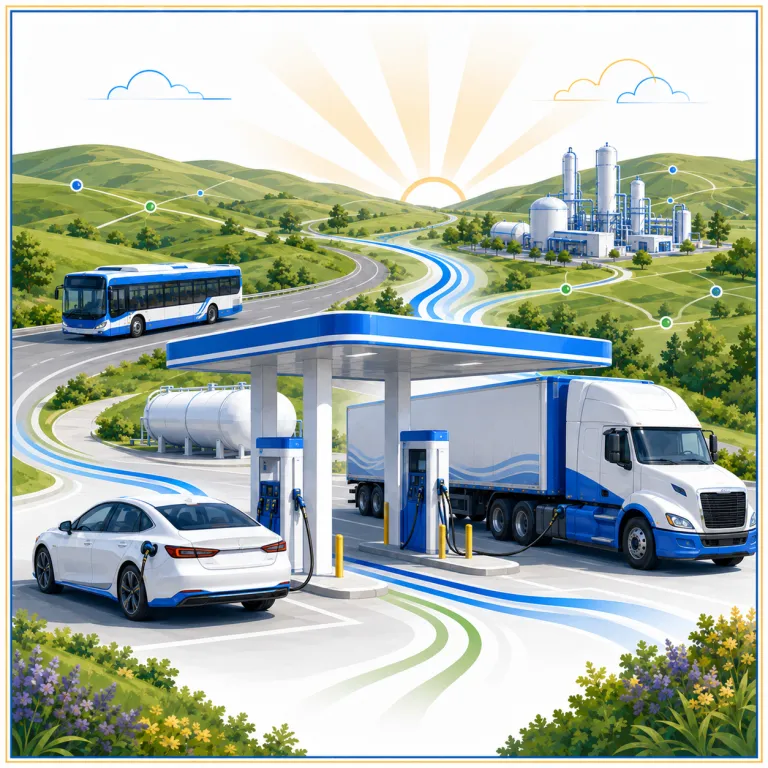
The proof is on the road. Fuel cell vehicles deliver more than 300 miles of range with three-to-five-minute refueling; fuel cell buses carry passengers daily for transit agencies including AC Transit, OCTA, and SunLine; and fuel cell trucks move freight through California's ports and corridors. The retail hydrogen network our members pioneered serves drivers every day, with real-time station status available to anyone with a phone.
This didn't happen overnight.
Our organization facilitated the world's first fuel cell vehicle market in California more than 25 years ago. That proof of concept now anchors a California and regional strategy: 70,000 fuel cell trucks supported by 200 heavy-duty stations by 2035, with momentum building in the Pacific Northwest, Gulf Coast, and other regions
The window for American leadership is open, and it won't stay open forever. Governments and manufacturers across Asia and Europe are investing heavily in hydrogen production, vehicles, and fueling networks. The countries that scale first will set the standards, own the supply chains, and capture the export markets.
“Twenty-five years in, the technology question is settled,” said Bill Elrick, Executive Director of the Hydrogen Fuel Cell Partnership. “Fuel cell trucks and buses run routes every day, and the fueling network keeps growing. The work now is to build out infrastructure quickly enough to meet demand, which requires sustained policy support and long-term investment. What gets built in the next five years determines who leads for the next fifty.”
Scaling takes three things: 1) sustained policy support, 2) continued infrastructure investment, and 3) industry coordination. And by working together, we can keep the momentum of the hydrogen future going.
H2FCP members get direct access to the officials setting hydrogen policy, real-time SOSS station data for their applications, representation on codes and standards committees, and a seat on the working groups addressing market development and deployment challenges on a daily basis.
Champion-level members also help steer the technical, strategic, and regulatory work shaping the market.
“As a founding member, the California Air Resources Board values the Partnership for the unique opportunities it fosters to collaborate with the hydrogen and fuel cell vehicle industry to directly overcome challenges, develop technical and policy insights, identify market development opportunities, and chart a path to market success for zero-emission hydrogen-powered transportation,” said Andrew Martinez, PhD, Zero Emission Infrastructure Specialist at CARB.
GO DEEPER: See the full case at Why Hydrogen and review the Membership Prospectus.
Fuel is flowing. Fleets are running on hydrogen every day. The network needs to grow, and growing it takes all of us. Learn more about membership at h2fcp.org/join-us.