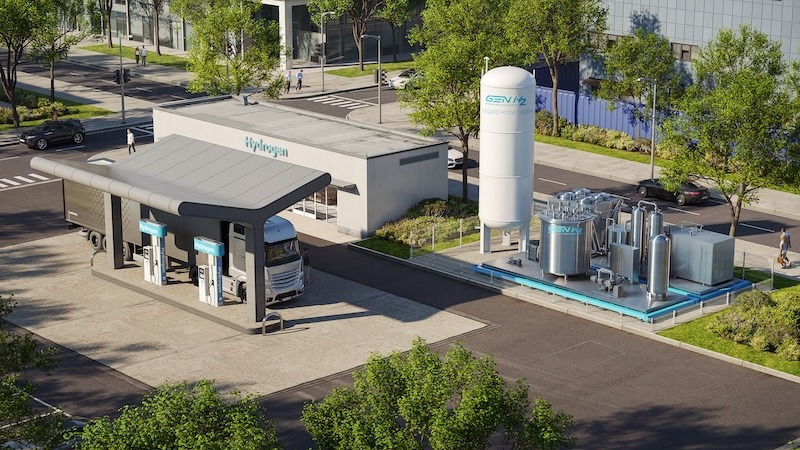
Clean hydrogen production keeps climbing, but a less visible problem is starting to slow adoption down: getting that hydrogen stored, stabilized, and delivered efficiently once it's made. A new analysis from GenH2 argues that storage infrastructure, not generation capacity, is the real constraint on hydrogen's role in a decentralized energy grid.
CEO Greg Gosnell’s case is straightforward. Renewable generation is decentralizing, moving into microgrids, ports, transit depots, and industrial campuses. Batteries handle short-duration storage well, but they can't match hydrogen's density or its ability to hold energy for weeks or months.
As Gosnell puts it, hydrogen “enables long-duration and even seasonal energy storage at much larger scales.”
Liquid hydrogen has always carried a density advantage. Cooling hydrogen to -253°C packs far more energy into a smaller footprint than compressed gas, which matters anywhere space is tight, like transit yards or urban fueling sites. And yet, liquid hydrogen boils off during storage and transfer, and those losses eat directly into the economics of running a hydrogen system.
NASA's Kennedy Space Center took that problem on directly, working with the National Institute of Standards and Technology. Their Ground Operations Demonstration Unit for Liquid Hydrogen project tested an integrated refrigeration and storage system that actively removes heat from stored liquid hydrogen rather than allowing it to slowly vent. Results showed zero-loss storage and transfer, verified across multiple tank fill levels.
GenH2 flags data centers as one of the biggest emerging opportunities. AI-driven computing is driving electricity demand higher every quarter, and operators need reliable, clean backup power rather than diesel generators sitting on standby. Controlled liquid hydrogen storage gives them that option.
The same logic applies across the built environment. Transit agencies can run zero-emission bus fleets off localized fueling stations. Ports and logistics hubs can stand up hydrogen systems without waiting on large centralized networks. Industrial sites can build real backup power resilience rather than relying on diesel.
Gosnell sums up the shift: hydrogen “will not scale through production advances alone. It will scale through infrastructure that operates efficiently in real-world conditions.”
Producing clean hydrogen was the first hurdle. Storing it efficiently and getting it where it's needed when it's needed is what separates today's pilot projects from a working decentralized hydrogen network.