The US transit bus sector is entering a more complex and fragmented phase of transition, shaped by a combination of policy recalibration, market constraints, and continued technological progress.
Over the past year, federal priorities have shifted toward a more technology-neutral and cost-focused approach, moving away from a singular emphasis on battery-electric buses. Recent federal funding allocations—totalling approximately USD 2.4 billion across 2025–2026 programs—continue to support fleet renewal and infrastructure upgrades, but with a broader eligibility framework that includes hybrid, compressed natural gas (CNG), and hydrogen technologies, alongside zero-emission options.
This shift reflects growing recognition of real-world deployment challenges. High capital costs, supply chain constraints, limited domestic manufacturing capacity, and operational performance issues—particularly related to range, charging requirements, and climate sensitivity—have slowed the pace of battery-electric adoption in several markets. At the same time, OEM instability and market concentration have introduced additional risk into procurement strategies.
In response, transit agencies are adopting pragmatic, multi-fuel strategies. Hybrid and CNG buses are increasingly being deployed as transitional solutions to maintain service reliability and manage costs, while hydrogen fuel cell buses are gaining traction for longer routes and operationally demanding use cases. Meanwhile, battery-electric buses continue to dominate long-term decarbonization plans, supported by a growing national pipeline of over 8,000 zero-emission buses in various stages of deployment.
At the same time, state and local governments remain key drivers of zero-emission adoption, with continued investments in electric buses and charging infrastructure, particularly in states such as California, New York, and New Jersey. This is creating a dual-speed transition, where federal policy emphasises flexibility and affordability, while state-level programs continue to push decarbonization targets.
Beyond vehicle technologies, the market is seeing parallel transformation across infrastructure, operations, and passenger systems. Agencies are investing in depot electrification and hydrogen refuelling infrastructure, bus priority corridors and BRT systems to improve speed and reliability, digital fare collection and contactless payment systems, and on-demand and microtransit services to enhance connectivity.
At an operational level, agencies are now confronting a more complex challenge: managing mixed fleets, evolving funding criteria, infrastructure constraints, and workforce readiness, while maintaining service reliability and improving passenger experience.
As a result, the US clean bus transition is no longer defined by a single technology pathway. Instead, it is evolving into a multi-dimensional transformation, where success will depend on balancing cost and funding realities, technology performance and reliability, policy alignment across federal and state levels, and long-term sustainability and near-term service delivery.
The market is therefore moving from a phase of policy-driven ambition to execution-driven pragmatism.
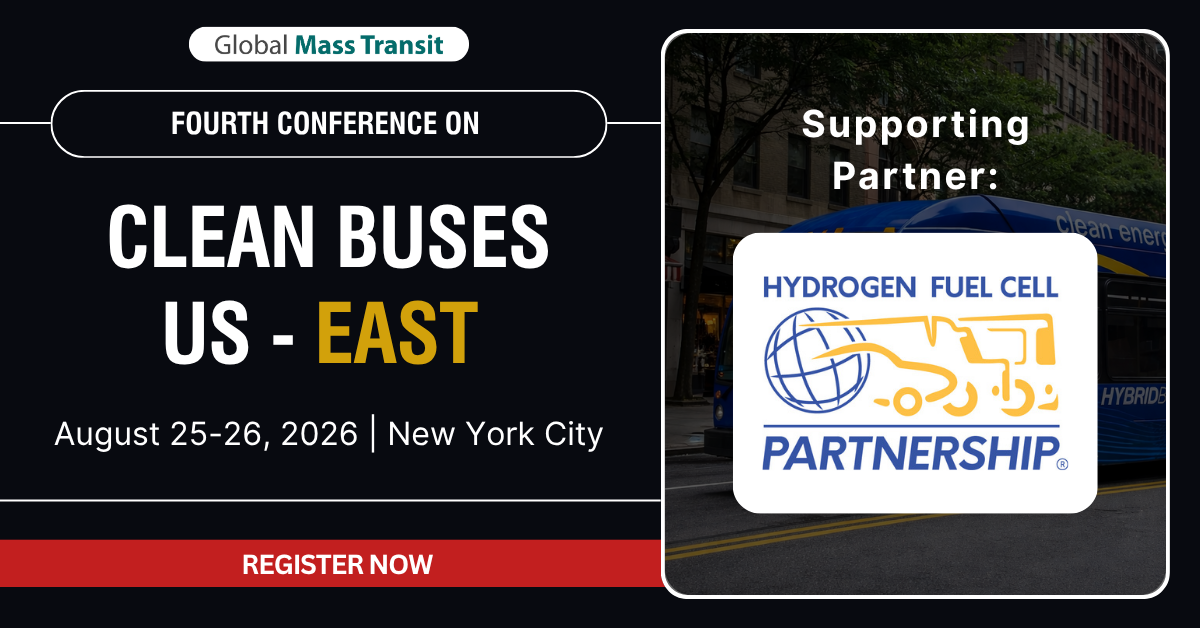
Against this backdrop, Global Mass Transit is organising the fourth conference on Clean Buses US - East on August 25-26 in New York City.